'The People’s Colossus? The British Co-operative Wholesale Societies and the World, 1863-1970'
When: 6.30pm – 7.30pm, Tuesday, 17 January 2017
Where: Presentation Hall, Design Building, City Campus East, Northumbria University, Newcastle
Refreshments will be available from 6.00pm
Free admission. Register here.
Synopsis
|
|||
 In
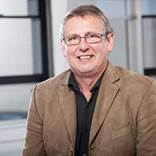
his lecture Professor Webster will explore how the British Co-operative
movement and specifically the Wholesale Societies, developed
international supply chains and markets between 1863 and
1970. He will show how they created one of most sophisticated supply
chain systems seen to date; one which managed trade with Europe, North
America, Africa and Asia.
He
will suggest that in many ways they were pioneers in international
supply chain development, outlining how these supply chains were
developed and managed, and how as a result, the Wholesale
societies came to exercise some leverage over British foreign and
imperial policy.
The
lecture will highlight the emerging picture of formidable and highly
sophisticated commercial operators, very much at variance with the
modern impression of the
‘co-op’ as a rather old fashioned and inefficient organisation, unable
to hold its own in the marketplace.
|
|||
About the Speaker
|
|||
Professor
Webster studied at the University of Birmingham and was awarded the
Ashley Prize for best PhD thesis in the Faculty of Commerce and Social
Science. He originally trained as a Further
Education teacher and a tax inspector, before joining Edge Hill
University in 1993.
He
was Head of History at Edge Hill University, Head of Humanities at
UCLAN and Head of History at Liverpool John Moores University before
joining Northumbria as a Professor in History. He is
a former Governor of the Co-operative College in Manchester, and Chairs
the Heritage Advisory Committee of the National Co-operative Archive.
He is currently working closely with the WEA and Building Futures East
on a project promoting social enterprise education
in Walker, Newcastle.
| |||

Showing posts with label news. Show all posts
Showing posts with label news. Show all posts
Tuesday, 13 December 2016
Professor Tony Webster, Northumbria University Public Lecture Series

Thursday, 28 April 2016
“In BAAS I found an intellectual home”: Meet the new Chair of BAAS, Professor Brian Ward
The following is excerpted from the British Association for American Studies website.
As the new Chair of BAAS I want to ensure that the Association continues to provide for all its members the sort of nurturing and intellectually generous environment that has meant so much to me over the past three decades, writes Professor Brian Ward. It was at BAAS that I first found an intellectual home among people who saw the virtues of multiple, sometimes genuinely integrated approaches to the study of the American experience.

The first BAAS conference I ever attended was in the mid-1980s at King Alfred’s College, the forerunner of the University of Winchester. At the time I was a postgraduate in history at Cambridge University, working on a thesis that explored the links among African American popular music, black consciousness and race relations during the civil rights and black power eras. That thesis bore all the hallmarks of my BA in American Studies from the University of East Anglia at a time when there really wasn’t much inter-disciplinarity in traditional history departments. More than a few eyebrows were raised as I gamely tried to argue that Motown songs were as revealing as Malcolm’s speeches and that James Brown meant a good deal more to most African Americans in the 1960s than H. Rap Brown. Still, I did manage to secure college funds to build a discography of esoteric rhythm and blues and soul records from a postgraduate tutor who was more used to disbursing money for additional palaeography instruction. I mention this only to note that it was at BAAS, amid the panels and pints of the annual conference, that I first found an intellectual home among people who saw the virtues of multiple, sometimes genuinely integrated approaches to the study of the American experience. >>>read more
Tuesday, 19 April 2016
Funding Successes for Randall Stephens
Randall Stephens, Reader in History and American Studies, has received a National Endowment for the Humanities (NEH) fellowship to take part in a seminar on “Problems in the Study of Religion.” The grant amounts to $2,700/£1,910 and is for a three-week session.
This prestigious NEH University of Virginia seminar brings together college and university faculty as well as advanced graduate students to study, research, and write on the subject.
The seminar will be lead by UVA professors Charles Mathewes, an ethicist, and Kurtis Schaeffer, who works on Buddhism and Tibetan religions. The programme's website further elaborates:
 |
| UVA's Rotunda building, designed by Thomas Jefferson |
The seminar will be lead by UVA professors Charles Mathewes, an ethicist, and Kurtis Schaeffer, who works on Buddhism and Tibetan religions. The programme's website further elaborates:
Problems in the Study of Religion brings together college and university faculty as well as advanced graduate students from the many disciplines that have a stake in understanding religion, for the purpose of coming to terms with the manifold changes in the study of religion that have occurred over the past decade.
Running for three weeks, the Institute will introduce scholars, within religious studies and without, to the enormously productive re-thinking of the idea of “religion” that has happened in recent years, in order to assist those interested in developing a richer and more nuanced understanding of the strengths and weaknesses, the opportunities and pitfalls, that come with using the category of “religion” to understand highly diverse manifestations of human practice and belief within the United States and around the world today.
The primary activities of the Institute will be close reading and discussion of important contemporary scholarship on the history, current hot spots, and teaching about religion, punctuated with lectures by specialists from select fields in the study of religion. Institute participants will also engage in independent research projects, making use of the University of Virginia’s world-class research facilities and staff.
Congratulations to Randall!
Running for three weeks, the Institute will introduce scholars, within religious studies and without, to the enormously productive re-thinking of the idea of “religion” that has happened in recent years, in order to assist those interested in developing a richer and more nuanced understanding of the strengths and weaknesses, the opportunities and pitfalls, that come with using the category of “religion” to understand highly diverse manifestations of human practice and belief within the United States and around the world today.
The primary activities of the Institute will be close reading and discussion of important contemporary scholarship on the history, current hot spots, and teaching about religion, punctuated with lectures by specialists from select fields in the study of religion. Institute participants will also engage in independent research projects, making use of the University of Virginia’s world-class research facilities and staff.
Thursday, 14 April 2016
Professor Brian Ward Elected Chair of British Association for American Studies
 The History and American Studies programmes at Northumbria University are pleased to announce that Professor Brian Ward has been elected Chair of the British Association for American Studies (BAAS). Founded in 1955, BAAS is this country’s leading learned society that focusses on the study of the United States.
Brian will serve a three year term and will be working closely with universities, colleges, schools, and independent scholars to promote the aims of the association in partnership with a range of external bodies, including the American Embassy and the Eccles Centre (British Library). Contrary to all rumours, his election to this office had nothing to do with his claret and blue allegiance and everything to do with his reputation as a world-leading scholar of American History and American Studies!
Well done Brian!
Tuesday, 12 April 2016
Northumbria University Contingent at the British Association for American Studies
 The American Studies contingent from Northumbria University was well represented at the 2016 British Association for American Studies in Belfast. At the organization’s annual AGM, Professor Brian Ward was elected Chair of BAAS, a position that he will hold for a maximum term of six years. Dr Joe Street was reelected to the BAAS Executive Committee. Phd Student Beth Davidson, who is working with DR. Dr Michael Cullinane, was awarded a BAAS grant to support her research on American diplomacy during the Teddy Roosevelt presidency. Six Northumbria academics presented papers at the conference: Dr Michael Cullinane on the Open Door policy of the United States; Prof David Gleeson on fears of slave insurrections in Georgia during the American Civil War; Brian Ward on the recordings of legendary bluesman Robert Johnson; PhD candidate Allan Symons on 1930s hillbilly music; Dr Julie Taylor on Gertrude Stein; and Joe Street contributed to a roundtable on teaching African American history.

The BAAS conference is the highlight of the academic year for American Studies academics and attracts roughly 300 delegates, most of whom deliver research papers. This year’s plenary lectures were delivered by John Howard of King’s College, London; Deborah Willis of New York University; and the Pulitzer Prize-winning novelist Richard Ford. The photograph shows Ford discussing his work with Joe Street at the conference reception.
Monday, 22 February 2016
Research in History Newsletter, 2015-16
Thanks to Tawny Paul for putting together a marvelous Research in History at Northumbria University Newsletter. The following is Professor David Gleeson’s summary of the year. Download and read the full newsletter here.

The Historians at Northumbria pride themselves in offering exciting and innovative undergraduate and postgraduate degrees in History. After a significant number of new appointments there are now 24 History staff, teaching a wide range of modules that cover diverse subjects over large spans of time and significant geographical range. Moreover, History offers a vibrant research culture. All of our optional modules are informed by staff research interests and expertise, and, like our seminars and conferences, are designed to engage students with the latest research carried out in the discipline of History. Please visit our website for more details:
Welcome to the 2015/16 History Research Newsletter. Following our jump of more than 40 places in the 2014 REF from our 2008 position and our placing in the top 20 for Research Outputs, we have built impressively on that excellent performance. In collaboration colleagues in English, Arts, and Media we were successful in applying to the University’s REF fund for Multidisciplinary Centres (MDC) with a proposal linked to our new Institute of the Humanities. The Institute has received over £50,000 invested in new space and equipment. It is located in the old SASS suite on the first floor of the Lipman building and includes new rooms for staff and visiting professors as well as two meeting rooms. There are also two large spaces for public events and some of our work will be conspicuously displayed in the outer room. Signage is already up and the whole space should be ready by Spring 2016, when there will be a launch event. The plans to fill the posts connected to the MDC are well advanced with advertisements for two senior positions already out and two early-career ones to follow later in 2016. The Institute will prove useful in encouraging more inter- and multidisciplinary research and improve our research grant capture for the next REF.
In terms of the next REF for 2020 (or perhaps 2021), history research is already in good shape for this stage in the process. The list of publications since 2013 is substantial, including a large number of monographs. In 2015 we continued to have good success in research bidding with Tawny Paul’s award of the prestigious one-year Fellowship at the Huntingdon Library in California, James McConnel’s award of an AHRC grant to support research on WWI in the Northeast, Colin Reid’s award of a Visiting Fellowship to the O’Moore Institute in NUI Galway, Anja-Silvia-Goeing’s British Academy Network Grant, and Nicole Robertson’s capture of an AHRC fellowship (her success making History 6 for 6 in this category over the past 7 years!). Congratulations to all and we look forward to more successes in 2016.
For outreach and service both to the profession and the larger community, the history group remained very active. Along with the smaller events, outlined below by research groups in this newsletter, the American history researchers welcome the 2015 meeting of the British Association of American Studies on its 60th anniversary in April. Over 300 scholars from all over Europe and North America Kudos to everyone involved but especially to Joe Street who coordinated this massive effort so well. In 2016 our major conference hosting will continue when Lesley Twomy and Carlos Conde-Solares
 welcome the 61st International Conference of the Association of Hispanists of Great Britain and Ireland, making Northumbria the first post-1992 university to host this premier organization for Hispanic Studies in the British Isles.
History, under the leadership of Joe Hardwick, hosted the AHRC-sponsored 2015 Newcastle Being Human Festival around the theme of Cities and Citizenship with hundreds of people attending more than a dozen free events throughout the city connecting humanities scholars and scholarship with the general public. Congratulations to Joe and the other history staff who participated (Tanja Bueltmann, Daniel Laqua, Laura O’Brien and Anja Silvia-Goeing). Thanks especially to PhD student Stan Neal for all the hard work he put into it. History continues to support research impact leaders participating in events and meetings with, among others, the Scottish and Irish governments, the Cooperative Society and the U.S. National Park Service. Under our new Impact Lead, Tanja Bueltmann, we will seek to expand our research impact even further in 2016.
We welcomed five new PhD students in 2015, including our first from the AHRC Heritage BGP. We also had won our first MRes scholarship under the same scheme. Congratulations to recent PhD graduates Andre Keil, Jen Kain, Maria Cannon and Liam Temple. We look forward to your continued success in the profession.
Finally, I’d like to welcome our new member of staff, Laura O’Brien. An historian of France with book just out with Manchester University Press on French caricature and republican identity, she strengthens our research in both the nineteenth century and modern Europe. Let me also recognize two of our professors who have moved into important leadership positions, Tom Lawson (Associate Dean for Academic Affairs) and Sylvia Ellis (Head of Dept. of Humanities). Despite their substantial administrative duties they still remain active members of the History research team.
Overall, then, we have had a successful start to the new REF cycle and with the new investment in the Institute of the Humanities, we look to go from strength to strength in the future.
David T. Gleeson
Professor of American History Research and Innovation Lead
Read more.

The Historians at Northumbria pride themselves in offering exciting and innovative undergraduate and postgraduate degrees in History. After a significant number of new appointments there are now 24 History staff, teaching a wide range of modules that cover diverse subjects over large spans of time and significant geographical range. Moreover, History offers a vibrant research culture. All of our optional modules are informed by staff research interests and expertise, and, like our seminars and conferences, are designed to engage students with the latest research carried out in the discipline of History. Please visit our website for more details:
Welcome to the 2015/16 History Research Newsletter. Following our jump of more than 40 places in the 2014 REF from our 2008 position and our placing in the top 20 for Research Outputs, we have built impressively on that excellent performance. In collaboration colleagues in English, Arts, and Media we were successful in applying to the University’s REF fund for Multidisciplinary Centres (MDC) with a proposal linked to our new Institute of the Humanities. The Institute has received over £50,000 invested in new space and equipment. It is located in the old SASS suite on the first floor of the Lipman building and includes new rooms for staff and visiting professors as well as two meeting rooms. There are also two large spaces for public events and some of our work will be conspicuously displayed in the outer room. Signage is already up and the whole space should be ready by Spring 2016, when there will be a launch event. The plans to fill the posts connected to the MDC are well advanced with advertisements for two senior positions already out and two early-career ones to follow later in 2016. The Institute will prove useful in encouraging more inter- and multidisciplinary research and improve our research grant capture for the next REF.
In terms of the next REF for 2020 (or perhaps 2021), history research is already in good shape for this stage in the process. The list of publications since 2013 is substantial, including a large number of monographs. In 2015 we continued to have good success in research bidding with Tawny Paul’s award of the prestigious one-year Fellowship at the Huntingdon Library in California, James McConnel’s award of an AHRC grant to support research on WWI in the Northeast, Colin Reid’s award of a Visiting Fellowship to the O’Moore Institute in NUI Galway, Anja-Silvia-Goeing’s British Academy Network Grant, and Nicole Robertson’s capture of an AHRC fellowship (her success making History 6 for 6 in this category over the past 7 years!). Congratulations to all and we look forward to more successes in 2016.
For outreach and service both to the profession and the larger community, the history group remained very active. Along with the smaller events, outlined below by research groups in this newsletter, the American history researchers welcome the 2015 meeting of the British Association of American Studies on its 60th anniversary in April. Over 300 scholars from all over Europe and North America Kudos to everyone involved but especially to Joe Street who coordinated this massive effort so well. In 2016 our major conference hosting will continue when Lesley Twomy and Carlos Conde-Solares

History, under the leadership of Joe Hardwick, hosted the AHRC-sponsored 2015 Newcastle Being Human Festival around the theme of Cities and Citizenship with hundreds of people attending more than a dozen free events throughout the city connecting humanities scholars and scholarship with the general public. Congratulations to Joe and the other history staff who participated (Tanja Bueltmann, Daniel Laqua, Laura O’Brien and Anja Silvia-Goeing). Thanks especially to PhD student Stan Neal for all the hard work he put into it. History continues to support research impact leaders participating in events and meetings with, among others, the Scottish and Irish governments, the Cooperative Society and the U.S. National Park Service. Under our new Impact Lead, Tanja Bueltmann, we will seek to expand our research impact even further in 2016.
We welcomed five new PhD students in 2015, including our first from the AHRC Heritage BGP. We also had won our first MRes scholarship under the same scheme. Congratulations to recent PhD graduates Andre Keil, Jen Kain, Maria Cannon and Liam Temple. We look forward to your continued success in the profession.
Finally, I’d like to welcome our new member of staff, Laura O’Brien. An historian of France with book just out with Manchester University Press on French caricature and republican identity, she strengthens our research in both the nineteenth century and modern Europe. Let me also recognize two of our professors who have moved into important leadership positions, Tom Lawson (Associate Dean for Academic Affairs) and Sylvia Ellis (Head of Dept. of Humanities). Despite their substantial administrative duties they still remain active members of the History research team.
Overall, then, we have had a successful start to the new REF cycle and with the new investment in the Institute of the Humanities, we look to go from strength to strength in the future.
David T. Gleeson
Professor of American History Research and Innovation Lead
Read more.
Monday, 15 February 2016
Interview with Joe Street about His Recent Scholarship
Randall Stephens
The University of Florida Press has just published Senior Lecturer in History Joe Street's Dirty Harry's America: Clint Eastwood, Harry Callahan, and the Conservative Backlash. In it Joe looks at the iconic antihero and asks what the popularity of the series reveals about modern America. Dirty Harry's rogue conservatism, and machismo justice appealed to large sections of the American public. The story also pointed to a powerful backlash against 1960s liberalism, the counterculture, and more. The rise of Reagan-era conservatism, says Joe, owes something to this new, strident political reaction.

In Dirty Harry's America Joe writes of the 1971 film’s “representation of the counterculture, race, gender, and sexuality” that “must be approached within the context of recent San Francisco and national history. . .”(67) At the same time Dirty Harry, Joe observes, “is far more complex than simple right-wing propaganda.”
I recently sat down with Joe to talk about why he wrote the book and how it fits into larger discussions about modern American culture. Among other things, Joe comments on how the debates and skirmishes of two of America's most turbulent decades continue to shape the nation in powerful ways.
In the interview below Joe also discusses his more recent work on the Black Panther Party and the intersection of race and politics in the post-1960s United States.
Thursday, 11 February 2016
Presidential History Network Conference at Northumbria University, May 26-27, 2016
The following is from the Presidential History Network blog.
The Presidential History Network is happy to announce the provisional programme for its 2016 conference at Northumbria University on May 26 & 27. It is truly a stellar lineup with:

Prof. H.W. Brands
Who will be speaking about his new biography of Ronald Reagan
We also have a panel of scholars and public historians who work in presidential libraries and archives, including:
19th Century Presidents
Kristin Cook (Edinburgh University): ‘On the Ground of Acting Officially’: Reclaiming Jefferson’s Proceedings in the Matter of the Louisiana Batture
Peter O’Connor (University of Manchester): ‘Corrupt and Unclean Hands’: Britain and the Presidency of Andrew Jackson
The Rooseveltian Century
Hans Krabbendam (Roosevelt Study Center): Theodore Roosevelt’s Foundation for an enduring Roosevelt Legacy in the Twentieth Century
Clive Webb (Sussex University): Britain’s President: Memorialising Franklin Roosevelt and the Special Relationship
Dean Kotlowski (Salisbury University/University of Salzburg): Goodnight, Mr. President: Franklin D. Roosevelt’s Legacy in Film and Television
Image, Rhetoric and Reality: Presidential Legacies in the Cold War Era
Richard V. Damms (Mississippi State University): Wrestling with the “Military-Industrial Complex”: Eisenhower’s Farewell Address in History and Memory
Thomas Tunstall Allcock (University of Manchester): Black-Ties and Barbeques: The Role of Cultural Diplomacy in Presidential Legacy
Toby Bates (Mississippi State University-Meridian): The Reagan Rhetoric: History and Memory during the 1980 Presidential Campaign
The Many Modes of Memory
Emily J. Charnock (University of Cambridge): The Farewell Tour: Presidential Travel and Legacy-Building
Mark McLay (Glasgow Caledonian University): The Impact of Presidential Anniversaries: The Revival of LBJ
Patrick Hagopian (Lancaster University): Monumental Significance: The Franklin Delano Roosevelt and the Dwight D. Eisenhower Presidential Memorials
Details for registration will be forthcoming. We hope to see you in Newcastle for the event.
The Presidential History Network is happy to announce the provisional programme for its 2016 conference at Northumbria University on May 26 & 27. It is truly a stellar lineup with:

Prof. H.W. Brands
Who will be speaking about his new biography of Ronald Reagan
We also have a panel of scholars and public historians who work in presidential libraries and archives, including:
- Tom Putnam from the JFK Library and Museum
- John Marszalek from the US Grant Library and Archives
- Bland Whitley from the Jefferson Papers project at Princeton University
19th Century Presidents
Kristin Cook (Edinburgh University): ‘On the Ground of Acting Officially’: Reclaiming Jefferson’s Proceedings in the Matter of the Louisiana Batture
Peter O’Connor (University of Manchester): ‘Corrupt and Unclean Hands’: Britain and the Presidency of Andrew Jackson
The Rooseveltian Century
Hans Krabbendam (Roosevelt Study Center): Theodore Roosevelt’s Foundation for an enduring Roosevelt Legacy in the Twentieth Century
Clive Webb (Sussex University): Britain’s President: Memorialising Franklin Roosevelt and the Special Relationship
Dean Kotlowski (Salisbury University/University of Salzburg): Goodnight, Mr. President: Franklin D. Roosevelt’s Legacy in Film and Television
Image, Rhetoric and Reality: Presidential Legacies in the Cold War Era
Richard V. Damms (Mississippi State University): Wrestling with the “Military-Industrial Complex”: Eisenhower’s Farewell Address in History and Memory
Thomas Tunstall Allcock (University of Manchester): Black-Ties and Barbeques: The Role of Cultural Diplomacy in Presidential Legacy
Toby Bates (Mississippi State University-Meridian): The Reagan Rhetoric: History and Memory during the 1980 Presidential Campaign
The Many Modes of Memory
Emily J. Charnock (University of Cambridge): The Farewell Tour: Presidential Travel and Legacy-Building
Mark McLay (Glasgow Caledonian University): The Impact of Presidential Anniversaries: The Revival of LBJ
Patrick Hagopian (Lancaster University): Monumental Significance: The Franklin Delano Roosevelt and the Dwight D. Eisenhower Presidential Memorials
Details for registration will be forthcoming. We hope to see you in Newcastle for the event.
Thursday, 4 February 2016
Grant Success for Shane Smith and Joe Hardwick
Congratulations are due to Shane Smith (second-year PhD student) and Joe Hardwick who have each received grants of £1,000 from the Canada-UK Foundation for research trips to Ontario in 2016.

Shane’s project on the migration of military veterans to Canada explores the culture of petitioning among settlers in the early nineteenth century. He will be making use of petitions that veterans sent to the colonial authorities for land (held at Libraries and Archives Canada, Ottawa), sources that will tell us a good deal about public interaction with state bodies. Joe’s project looks at the culture of special days of worship in the Canadian colonies from the eighteenth century through to the mid-twentieth. Executive government records at LAC will help him determine how these days were called, and the archive’s extensive newspaper collections will shed light on public reception.
The Canada-UK Foundation is a very useful source of funding and anyone interested in undertaking research in Canada should check out their website.
Monday, 1 February 2016
Senior Lecturer in American History Joe Street Publishes Second Book
Congratulations to Joe Street! The senior lecturer in American history at Northumbria University has just published his second book, Dirty Harry's America: Clint Eastwood, Harry Callahan, and the Conservative Backlash, with the University Press of Florida, 2016.

From the UPF website:
Here's what the critics are saying:
"Street provides a crucial critical and cultural service by not only studying Eastwood's individual films in sharp detail but also by providing a close and serious analysis of the cultural and historic times of the films." -Sam B. Girgus, author of Clint Eastwood's America
"By far the most comprehensive, sustained, and detailed discussion of the Dirty Harry phenomenon. A thorough and engaging account of how a fictitious renegade cop became an enduring icon of the angry conservative backlash that sought to halt 1960s liberalism in its tracks." -Nick Heffernan, author of Culture, Environment and Ecopolitics

From the UPF website:
In Dirty Harry's America, Joe Street argues that the movies shed critical light on the culture and politics of the post-1960s era and locates San Francisco as the symbolic cultural battleground of the time. Across the entire series, conservative anger and moral outrage confront elitist liberalism and moral relativism. Paying particular attention to the films' representation of crime, family and community, sexuality, and race, Street maintains that through referencing real events and political struggles, the films themselves became active participants in the culture wars.
Unapologetic carrier of right and might, Harry Callahan becomes America's Ur-conservative: "unbending, moral, incorruptible, and most important, always right." Long after the series, Callahan's legacy remains strong in American political discourse, cinema, and pop culture, and he continues to shape Eastwood’s later political and cinematic career.
Unapologetic carrier of right and might, Harry Callahan becomes America's Ur-conservative: "unbending, moral, incorruptible, and most important, always right." Long after the series, Callahan's legacy remains strong in American political discourse, cinema, and pop culture, and he continues to shape Eastwood’s later political and cinematic career.
Here's what the critics are saying:
"Street provides a crucial critical and cultural service by not only studying Eastwood's individual films in sharp detail but also by providing a close and serious analysis of the cultural and historic times of the films." -Sam B. Girgus, author of Clint Eastwood's America
"By far the most comprehensive, sustained, and detailed discussion of the Dirty Harry phenomenon. A thorough and engaging account of how a fictitious renegade cop became an enduring icon of the angry conservative backlash that sought to halt 1960s liberalism in its tracks." -Nick Heffernan, author of Culture, Environment and Ecopolitics
Monday, 25 January 2016
The American Studies Newsletter, 2015
Haven't had a chance to look at the the 2015 American Studies Newsletter? Download it here and find out about all the exciting things happening at Northumbria University, past, present, and future. The Newsletter includes interviews with an undergrad and a grad student, the latest about grant success, conferences that have taken place and those planned for 2016, and information about a visiting scholar. See also important updates on staff, new publications, and more.
Prof Brian Ward writes in his intro to the Newsletter:

In 2014-2015, the American Studies programme at Northumbria University continued to enhance its reputation as home to one of the UK’s most impressive constellations of researchers and teachers in US history, literature, and popular culture. As you’ll see from the features in this latest edition of the newsletter, during the last year we have published an im- pressive array of books and articles, given countless talks at schools, conferences, and universities around the globe, hosted a couple of major international conferences, participated in a wide range of media work in television, radio, and online, been involved with a variety of public events that have showcased our expertise on everything from US religion and politics, to the impact in Britain of American popular music.
Meanwhile, Northumbria graduate students, whether doing MAs or PhDs on American-themed topics, are now a major and respected part of the American Studies landscape in Britain—a status exemplified by the election of doctoral student Megan Hunt as the postgraduate secretary for the admirably named HOTCUS (Historians of the Twentieth Century United States). Moreover, with the arrival of our third undergraduate intake in 2015, we also now have students in place at all three levels of the American Studies BA, while undergraduates majoring in history and literature continue to flock to US-themed modules. As ever, one of our priorities this year is to do all we can to make sure that those students have a thoroughly enjoyable educational experience and that they emerge from Northumbria with the kinds of skills, knowledge, attitudes and aptitudes that will set them up well for employment or further study. American Studies students at Northumbria do not only get the opportunity to learn about the US, its history, politics, and cultures, from a cracking team of world-class teacher-researchers, they also get to develop the kinds of analytical and communication skills that are invaluable in any number of careers. Another priority is to work even more closely with schools and colleges to make sure that they and their students are aware of the attractions of American Studies as a degree programme, and the many advantages of doing it at Northumbria. >>>read on
Monday, 7 September 2015
Worlds and Networks of Higher Learning: Modes of Interaction between Universities, Academies and Schools, 1400-1750
Northumbria University is extending an invitation on the 10th of October 2015 to the first workshop of a series of four launching an international collaborative project sponsored by the British Academy. The project investigates the nature and scope of higher learning and collaborative networks from the late Middle Ages to the era of Enlightenment. Our novel approach will consider topics that university historians have largely ignored: the intense collaboration between university scholars and instructors; printers and providers of teaching objects and tools; administrators and students at academies, independent colleges, gymnasiums and Latin schools. Contributing experts include renowned scholars in late medieval and early modern school, academy, book and university history of England, the German lands, France, Italy, Spain and bordering countries. Project leaders are Dr Anja-Silvia Goeing (PI, Northumbria University), Prof. Glyn Parry (University of Roehampton), Prof. Mordechai Feingold (California Institute of Technology).
For information about the project and registration for any of the four workshops please contact Anja at anja.goeing@gmail.com . Please see also our website for programme updates at wnhl1400.org.
1) Politics of Interaction: Colleges, Academies and Universities (10 October 2015, Northumbria University, Newcastle upon Tyne)
2) Important and Celebrated Individual Encounters (27 Feb 2016, University of Oxford, Trinity College)
3) The Venues for Scholarly Output: Collections, Treatises, Textbooks, Archives (25 June 2016, University of Cambridge, Trinity College)
4) Co-operative Inter-regional Worlds: Productions, Markets, Travel and Trade (15 October 2016, Institute of Historical Research, London)
Venue: Northumbria University, Sutherland Building, Boardroom I
Date: 10 October 2015, 10:00 to 17:30; Workshop Dinner 9 October 2015 at Derwent Manor
National and civic politics conditioned collaborations between different institutions of higher learning. Who was responsible for setting up and maintaining regulations and control of these exchanges? Were goals of the collaborations explained and discussed in governing bodies inside and outside the institutions in question? Did the manner in which professors were selected influence the scope and character of institutions? How relevant were school regulations about admission and scholarships for multi-institutional careers of students? Were schools, academies and universities free to choose other institutions to collaborate with? How did scholars, philosophers and scientists consider memberships in different academies, and how did this help to connect the institutional bodies? Did changing collaborations induce curriculum changes?
For information about the project and registration for any of the four workshops please contact Anja at anja.goeing@gmail.com . Please see also our website for programme updates at wnhl1400.org.
Workshop Topics and Dates
1) Politics of Interaction: Colleges, Academies and Universities (10 October 2015, Northumbria University, Newcastle upon Tyne)
2) Important and Celebrated Individual Encounters (27 Feb 2016, University of Oxford, Trinity College)
3) The Venues for Scholarly Output: Collections, Treatises, Textbooks, Archives (25 June 2016, University of Cambridge, Trinity College)
4) Co-operative Inter-regional Worlds: Productions, Markets, Travel and Trade (15 October 2016, Institute of Historical Research, London)
First Workshop -- Programme
Politics of Interaction: Colleges, Academies and Universities
Politics of Interaction: Colleges, Academies and Universities
Venue: Northumbria University, Sutherland Building, Boardroom I
Date: 10 October 2015, 10:00 to 17:30; Workshop Dinner 9 October 2015 at Derwent Manor
Research Questions
National and civic politics conditioned collaborations between different institutions of higher learning. Who was responsible for setting up and maintaining regulations and control of these exchanges? Were goals of the collaborations explained and discussed in governing bodies inside and outside the institutions in question? Did the manner in which professors were selected influence the scope and character of institutions? How relevant were school regulations about admission and scholarships for multi-institutional careers of students? Were schools, academies and universities free to choose other institutions to collaborate with? How did scholars, philosophers and scientists consider memberships in different academies, and how did this help to connect the institutional bodies? Did changing collaborations induce curriculum changes?
Provisional Programme
(Please go to wnhl1400.org to see recent updates and changes to the programme)
From 10:00: Coffee
10:15-10:55: Andreas Sohn (Université de Paris XIII – Sorbonne Paris Cité)
The Theological Seminaries and the University of Paris in the 15th Century
10:55-11:35: Willem Frijhoff (Erasmus University, Rotterdam)
A Multifaceted Educational Landscape: the Dutch and their Schools in and outside the Dutch Republic
Coffee
11:45-12:25: Karine Crousaz (University of Lausanne)
The Role of Swiss Political, Religious, and Academic Authorities in Student Mobility during the Sixteenth Century
12:25-13:05: Anja-Silvia Goeing (Northumbria University)
The Politics of Scholarships in Early Modern Europe
Lunch
13:40-14:10: Glyn Parry (University of Roehampton)
English Politics and the Politics of Mathematics Education
14:10-14:50: David Lines (University of Warwick)
Institutions of Learning and Their Cultural/Political Interactions in Bologna, c. 1550-1750
Coffee
15.00-15:40: Simone Testa (European University Institute, San Domenico di Fiesole)
Geography, Politics, and Diplomacy in the Accademia Veneziana: Bibliography, Prosopography, and Networks
15:40-16:20: Thomas O’Connor (Maynooth University)
The Role of Universities and Seminaries in the Provision of Early Modern Irish Catholic Clergy
16:20-17:00: Yari Perez-Marin (Durham University)
The Circulation of Knowledge in Early Colonial New Spain: A Plural Landscape
Followed by: Concluding Remarks (Everybody)
Wednesday, 6 May 2015
Professor David Gleeson Appointed to Organization of American Historian's Distinguished Lecturers Programme


David is part of a 2015-16 cohort of 47 respected and accomplished scholars and teachers from the United States, Canada, and England. He is only one of two from England in the current class. David’s lectures include: “The Green and the Gray: The Irish in the Confederate States of America”; “The Hidden Diaspora: The English in the United States, 1783–1914”; and “Did the Irish ‘Become White’?” "I'm delighted to be taking part in this programme," said David, "and I look forward to delivering lectures on my research and teaching in the states." "This recognition," he continued, "speaks to our department's strengths in American history and American studies."
Indeed, Northumbria University now has three OAH Distinguished Lecturers. Professor Brian Ward and Dr. Randall Stephens were appointed in previous years. (In February Randall delivered one of his lectures at Belmont University, Nashville, Tennessee, titled: “The Devil’s Music: Race Rock and Religion in the 1950s.”) In Great Britain the only other university with three Distinguished Lecturers is Oxford University. David’s appointment is a sure indicator of Northumbria University’s leading role in the study of the United States.
Wednesday, 22 April 2015
Northumbria Hosts International Conference for British Association of American Studies
American studies at Northumbria University attracted an international array of delegates for the 60th Anniversary conference of the British Association for American Studies
(BAAS)
between April 9-12. Current BAAS chair, Sue Currell of the University
of Sussex, was delighted with the conference which attracted over 250
people: “It seemed very fitting to look back on 60 years of the British
Association for American Studies while being
hosted by one of the newest and most ambitious American Studies
programmes in the country. As we approach another US election, I think
the success of the conference speaks volumes about the vitality and
significance of research and teaching on American topics
around the UK.”

The
opening plenary was well-attended lecture given by Guardian journalist
Gary Younge that featured in the newspaper the following day.
The full transcript will be published in a forthcoming collection of
essays on voting rights in the United States to be edited by Dr Henry
Knight Lozano and Dr Joe Street both of Northumbria University. Current
political events in the US were also central
to another plenary lecture delivered by Professor Dana Nelson from
Vanderbilt University, who spoke about the politics of Presidential
power. Professor Nelson updated the audience on the findings of her 2008
book
Bad for Democracy, to
include observations on the current Obama administration. American
literature Professor and Guardian columnist, Sarah Churchwell, also gave
a lively guided tour of the world of
F. Scott Fitzgerald as it appeared in The Great Gatsby. Speakers were sponsored and supported by the Journal of American Studies
and the Eccles Centre for American Studies at the British Library.
The audience and participants included members of the public as well as
representatives from the cultural affairs office of the US Embassy, who
generously supported postgraduate student
attendance at the conference.
Alongside
numerous academic panels in a wide variety of subjects of significance
to American studies scholars, there were publishing workshops and
representation from over 20 international
publishers. Delegates also took the opportunity to visit the
University’s library holdings in American materials, including the
papers of the Black Panther Party and the Records of Students for a
Democratic Society.
Local hotels and the local economy also benefited from such a
large influx of extra guests as delegates took advantage of visiting the
city, many for the first time. Sue Currell noted that “The annual
conference is central to sustaining the network of
scholars who are researching the history, culture and politics of
America in the UK. BAAS is very grateful to the hosts at Northumbria
University for creating such a welcoming and successful event to
celebrate our Anniversary: there is no doubt in my mind
that everyone who attended is now looking forward to the nearest
opportunity to come back.”
Friday, 27 March 2015
Research Highlights Silent Warriors of First World War
 |
| 1917 poster. Courtesy of the LOC. |
A Northumbria University, Newcastle research student is calling for the women of World War One to be recognised.
John Hulme, a Master of Research student in History, asks why women rarely feature on war memorials despite the significance of their contributions during the war period. Using memorials, archives, databases and the works of several historians, John’s research considers the status of women in Edwardian England, contemporary views of the war and the role of women in it, and memory and memorialisation.
His research paper, entitled ‘Commemorating the Women of World War One, Never or Now?’ concludes that the time is right for a discussion of a new memorial: one that fully recognises the contribution women made to the British victory in the First World War.
John said: “First World War memorials are a ubiquitous feature of our built environment, present in every city, town and village. Writers of the time acknowledged the presence of women in many wartime occupations from 1914 onwards. Women replaced men in factories and offices as well as filling jobs created to meet the demands of the war, including producing munitions, manufacturing aircraft and nursing the wounded.
“My paper seeks to address why, given this contribution, women feature so rarely on war memorials.”
The topic is particularly timely as it takes place during the nation’s four-year commemoration of the Great War of 1914-18. With 2014 marking 100 years since the start of the war, the Government is leading on a series of remembrance activities taking place across the country. Coordinated by the Department for Culture, Media and Sport, the events will culminate in the building of a permanent commemoration that will memorialise this significant milestone in world history. >>> read on
Monday, 16 March 2015
Economic Culture and the Lower Middling Sort: Risk, Reputation and Reward in Eighteenth-Century Britain
Tawny Paul
In this coming academic year Tawny Paul, Lecturer in Early Modern History, will be undertaking a long-term (9 month) fellowship at the prestigious Huntington Library in California. The work she will do there in the library's substantial collections will be crucial for her current research project. While there she will also participate in the lively intellectual life of the research center. Below Tawny briefly outlines the work she will be doing out west and presents the types of questions that will drive her research.
One of the major social developments in Britain during the long eighteenth century was the rise of a ‘middling’ sort of people. Like the middle class today, society’s ‘stout midriff’ included a broad swath of individuals, from merchants and lawyers to petty traders and artisans. In many ways, the application of the term ‘middling sort’ to this broad section of society seems problematic. While the middling sorts have been of interest to scholars for some time, most of this work has focused on the elite and most visible members of this broad group: merchants, professionals and civic elites. The ‘lower middling’ sorts remain largely neglected. This project aims to provide a much-needed account of this group.
The wealth, occupations and life experiences of the lower middling were intimately tied to processes of commercialization and economic expansion. In examining ‘economic culture’, I will explore the impact that the economic facts of life had upon individual identities, attitudes and social relationships. Accounting for the lower middling allows us to question some of the major narratives that have framed how we think about the texture of economic relationships in eighteenth-century Britain: For these individuals, was an interpersonal economy, based upon a personal ethic, replaced by a more modern and impersonal system of exchange? What role did gender, and in particular masculinities, play in economic life? How did men who were neither patriarchal providers nor polite gentlemen fabricate their gender identities? How did individuals make sense of the frequent bankruptcies and business failures that plagued middling business?
 |
| 'Roast beef & port or Bully Bramble Esqr., Justice of Peace in Wasp Town', 1772. Print courtesy of the Library of Congress. |
The wealth, occupations and life experiences of the lower middling were intimately tied to processes of commercialization and economic expansion. In examining ‘economic culture’, I will explore the impact that the economic facts of life had upon individual identities, attitudes and social relationships. Accounting for the lower middling allows us to question some of the major narratives that have framed how we think about the texture of economic relationships in eighteenth-century Britain: For these individuals, was an interpersonal economy, based upon a personal ethic, replaced by a more modern and impersonal system of exchange? What role did gender, and in particular masculinities, play in economic life? How did men who were neither patriarchal providers nor polite gentlemen fabricate their gender identities? How did individuals make sense of the frequent bankruptcies and business failures that plagued middling business?
Wednesday, 4 March 2015
Award for Documentary Film on Martin Luther King Jr's 1967 Visit to Newcastle

If you want to learn more about King’s visit and about the making of this award-winning documentary Brian and BBC Senior Producer Murphy Cobbing will be discussing them at the Great North Museum at 7pm on April 24, 2015. The event will also include music, a wine reception, and screenings of the documentary and King’s speech.
Admission to A King’s Speech on Tyneside: Remembering Martin Luther King’s Historic Visit to Newcastle is free, but you will need to book a place. (For more details, see here.)
This event is part of the Journey to Justice project on the US civil rights movement and its links to struggles for social justice in the North East which will be coming to venues around Tyneside this Spring.
Monday, 9 February 2015
Semester 2 History Seminar Series
The next history seminar is coming up this week. Northumbria's own Neil Murphy will be giving a paper dealing with Henry VIII and the colonisation of Boulogne, 1544-47. We hope to see you there. All sessions take place on Wednesdays at 4:30pm in Lipman room 033.

11 Feb Neil Murphy (Northumbria), ‘The cradle of empire: Henry VIII and the colonisation of Boulogne, 1544-47’.
25 Feb Joseph Hardwick (Northumbria), ‘Special days of worship and national religion in the British Empire, 1800-1914’.
11 March Ultán Gillen (Teesside), ‘Lally Tolendal and French counter-revolutionary ideology’.
25 March Erika Hanna (Edinburgh), '"There’s no banshee now": urban folklore and decline in inner city Dublin during the 1970s’.
29 April Roy Foster (Hertford College, Oxford), ‘The lives of others: biography, hagiography and the Irish revolution’
Wednesday, 4 February 2015
My Sabbatical in Brief
Julie Taylor
While on sabbatical last semester I had the opportunity to complete one research project and begin another.
Modernism and Affect, which will be published by Edinburgh UP later in 2015, brings together essays by scholars working across several disciplines within modernist studies. Reconsidering modernism’s complex relationship with questions of emotion, feeling, and embodiment after theory’s ‘affective turn’, the collection encompasses work on literature, architecture, philosophy, dance, visual art, and design. In the introduction I outline some of the key works and concepts within the humanities’ recent engagement with affect, and chart modernism’s troubled relationship to matters affective. My own chapter contribution to the book considers the Harlem Renaissance writer Jean Toomer’s critical deployment of a racist stereotype that links African American subjectivity to extreme emotional expressiveness.
The sabbatical also gave me time to explore my new research project. It is an examination of the pedagogical dimensions of American modernism, taking up the implications of Hugh Kenner’s famous claim that the modernists were ‘poets at the  blackboard’. My key questions revolve around the points of contact between experiments in writing and experiments in education in the early twentieth century, which included theories and projects as diverse as Bauhaus, Montessori, Deweyism, and psychoanalytic approaches to learning. My research has so far centered on the literary innovator and theorist, modernist mentor, and occasional lecturer, Gertrude Stein. Stein expressed scepticism about certain educational innovations she encountered (such as the ‘Great Books’ scheme at Chicago University), but her work guides us towards a reading practice that challenges many traditional ideas about pedagogy. Recently, I have become fascinated by Stein’s writing for children, including her 1939 book, The World is Round, written on the invitation of the successful children’s author, would-be modernist, and member of New York’s Bank Street Experimental School, Margaret Wise Brown. Stein’s work invites us to ask important questions about the relationship between modernism, children’s literature, and theories of learning at the beginning of the twentieth century.
While on sabbatical last semester I had the opportunity to complete one research project and begin another.
 |
| Jean Toomer, courtesy of the Beinecke, Library, Yale University. |
blackboard’. My key questions revolve around the points of contact between experiments in writing and experiments in education in the early twentieth century, which included theories and projects as diverse as Bauhaus, Montessori, Deweyism, and psychoanalytic approaches to learning. My research has so far centered on the literary innovator and theorist, modernist mentor, and occasional lecturer, Gertrude Stein. Stein expressed scepticism about certain educational innovations she encountered (such as the ‘Great Books’ scheme at Chicago University), but her work guides us towards a reading practice that challenges many traditional ideas about pedagogy. Recently, I have become fascinated by Stein’s writing for children, including her 1939 book, The World is Round, written on the invitation of the successful children’s author, would-be modernist, and member of New York’s Bank Street Experimental School, Margaret Wise Brown. Stein’s work invites us to ask important questions about the relationship between modernism, children’s literature, and theories of learning at the beginning of the twentieth century.
Monday, 19 January 2015
Showing of film Selma with Intro Lecture by Prof Brian Ward, January 31
The North East premiere of the new feature film Selma will take place at the Star & Shadow Cinema at 2pm on Saturday, January 31, a week before its official release. The movie tells the story of a pivotal moment in the African-American fight for voting rights in the 1960s South. Northumbria Professor in American Studies Brian Ward will give a short introductory talk on the film before the screening.

Film critic A.O. Scott writes of the movie in a recent New York Times review:
The showing of the film at the Star and Shadow will also serve as a fundraiser for the Journey to Justice/Shadow of Selma Project. In Spring 2015, J2J/SoS will bring an exhibition on the US Civil Rights Movement and its connections to struggles for social justice and democracy in the North East to the Discovery and Great North Museums, as well as running various public engagement and educational events on similar themes.
Tickets cost £10 each and are available here.
For more information on tickets and Journey to Justice, contact Bethany Elen Kirtley Coyle. For more information on the Star & Shadow, go here.
Film critic A.O. Scott writes of the movie in a recent New York Times review:
While entirely satisfying on its own, “Selma” seems to contain the seeds of at least a dozen other movies — a reminder of how fertile the civil rights era is and how poorly it has been explored by popular culture. Spike Lee and Denzel Washington gave us a fine Malcolm X (who shows up here briefly, played by Nigel Thatch), but how long will we have to wait for a biopic devoted to Bayard Rustin (Ruben Santiago-Hudson), Amelia Boynton (Lorraine Toussaint) or Andrew Young (Andre Holland)? Or for a daring director to tackle the story of the Student Nonviolent Coordinating Committee, whose internal tensions and impatience with Dr. King surface here in arguments between James Forman (Trai Byers) and the future Congressman John Lewis (Stephan James)? Where is the premium-cable mini-series about Diane Nash (Ms. Thompson) and James Bevel (Common)? The Martin Luther King-Ralph Abernathy (Colman Domingo) buddy movie? The “Law & Order” spinoff about the career of the Justice Department lawyer John Doar (Alessandro Nivola)? They are all here, in miniature, but “Selma” made me impatient for more. . .
“Selma” is not a manifesto, a battle cry or a history lesson. It’s a movie: warm, smart, generous and moving in two senses of the word. It will call forth tears of grief, anger, gratitude and hope. And like those pilgrims on the road to Montgomery, it does not rest.*
 |
| Edmund Pettus Bridge scene from the film. |
“Selma” is not a manifesto, a battle cry or a history lesson. It’s a movie: warm, smart, generous and moving in two senses of the word. It will call forth tears of grief, anger, gratitude and hope. And like those pilgrims on the road to Montgomery, it does not rest.*
The showing of the film at the Star and Shadow will also serve as a fundraiser for the Journey to Justice/Shadow of Selma Project. In Spring 2015, J2J/SoS will bring an exhibition on the US Civil Rights Movement and its connections to struggles for social justice and democracy in the North East to the Discovery and Great North Museums, as well as running various public engagement and educational events on similar themes.
Tickets cost £10 each and are available here.
For more information on tickets and Journey to Justice, contact Bethany Elen Kirtley Coyle. For more information on the Star & Shadow, go here.
Subscribe to:
Posts (Atom)