'The People’s Colossus? The British Co-operative Wholesale Societies and the World, 1863-1970'
When: 6.30pm – 7.30pm, Tuesday, 17 January 2017
Where: Presentation Hall, Design Building, City Campus East, Northumbria University, Newcastle
Refreshments will be available from 6.00pm
Free admission. Register here.
Synopsis
|
|||
 In
his lecture Professor Webster will explore how the British Co-operative
movement and specifically the Wholesale Societies, developed
international supply chains and markets between 1863 and
1970. He will show how they created one of most sophisticated supply
chain systems seen to date; one which managed trade with Europe, North
America, Africa and Asia. In
his lecture Professor Webster will explore how the British Co-operative
movement and specifically the Wholesale Societies, developed
international supply chains and markets between 1863 and
1970. He will show how they created one of most sophisticated supply
chain systems seen to date; one which managed trade with Europe, North
America, Africa and Asia.
He
will suggest that in many ways they were pioneers in international
supply chain development, outlining how these supply chains were
developed and managed, and how as a result, the Wholesale
societies came to exercise some leverage over British foreign and
imperial policy.
The
lecture will highlight the emerging picture of formidable and highly
sophisticated commercial operators, very much at variance with the
modern impression of the
‘co-op’ as a rather old fashioned and inefficient organisation, unable
to hold its own in the marketplace.
|
|||
About the Speaker
|
|||
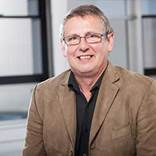
Professor
Webster studied at the University of Birmingham and was awarded the
Ashley Prize for best PhD thesis in the Faculty of Commerce and Social
Science. He originally trained as a Further
Education teacher and a tax inspector, before joining Edge Hill
University in 1993.
He
was Head of History at Edge Hill University, Head of Humanities at
UCLAN and Head of History at Liverpool John Moores University before
joining Northumbria as a Professor in History. He is
a former Governor of the Co-operative College in Manchester, and Chairs
the Heritage Advisory Committee of the National Co-operative Archive.
He is currently working closely with the WEA and Building Futures East
on a project promoting social enterprise education
in Walker, Newcastle.
| |||

Showing posts with label events. Show all posts
Showing posts with label events. Show all posts
Tuesday, 13 December 2016
Professor Tony Webster, Northumbria University Public Lecture Series

Thursday, 24 November 2016
Harriet Martineau Dreams of Dancing and a Talk by Joe Hardwick
The play Harriet Martineau Dreams of Dancing is running until December 3 at the Live Theatre in Quayside. Here is the summary of it from the Live Theatre website:
 Tynemouth, 1844. Harriet Martineau, leading radical thinker, feminist and anti-slavery campaigner of her day, seeks refuge from the claustrophobic demands of London society, with her needlepoint and a telescope in an attic room on Front Street. But instead of escape, she finds an unequal world in need of her attention. This is a world of racial intolerance and gender imbalance, of eccentric scientific practices such as mesmerism and phrenology. A world where a negligent husband may die from a pig falling on his head in the street.
Following on from the critically acclaimed 2010 production of A Northern Odyssey ( The Guardian), Harriet Martineau Dreams of Dancing is the second in Olivier Award-winning writer, Shelagh Stephenson’s trilogy of witty and engaging plays at Live Theatre exploring the contemporary relevance of Tyneside’s political and cultural heritage. The play features music by acclaimed folk band, The Unthanks, re-arranged from songs on their Mount the Air album, and dance inspired by Northumberland traditions, choreographed by Lee Proud (Billy Elliot – the musical) both part of the creative team in A Northern Odyssey.
On Tuesday Northumbria University Senior Lecturer in History Joe Hardwick gave a talk after the performance. Listen to that below.

Following on from the critically acclaimed 2010 production of A Northern Odyssey ( The Guardian), Harriet Martineau Dreams of Dancing is the second in Olivier Award-winning writer, Shelagh Stephenson’s trilogy of witty and engaging plays at Live Theatre exploring the contemporary relevance of Tyneside’s political and cultural heritage. The play features music by acclaimed folk band, The Unthanks, re-arranged from songs on their Mount the Air album, and dance inspired by Northumberland traditions, choreographed by Lee Proud (Billy Elliot – the musical) both part of the creative team in A Northern Odyssey.
Thursday, 13 October 2016
Humanities/Social Sciences Workshop and Professor Dominique Kalifa as Society for the Study of French History Visiting Scholar
The humanities/social sciences workshop will take place in the Institute of the Humanities next Friday (21 October), to mark the visit of Professor Dominique Kalifa as Society for the Study of French History Visiting Scholar. Professor Kalifa is a leading scholar of nineteenth-century cultural history with wide-ranging and interdisciplinary interests, including crime, the city, the press, and time/periodization.

As the programme shows, the workshop brings together a range of scholars from across the North East to discuss their own work under these four broad thematic headings. This promises to be a very interesting day, with potential for stimulating interdisciplinary discussion and exchange of ideas.
The event takes place in the Institute of the Humanities, First Floor, Lipman Building. All are welcome to attend, and it would be helpful if you could RSVP me just so I can get a sense of numbers for catering. Please share details with anyone else you feel would be interested in attending.
A reminder of two other events taking place in Durham and Newcastle as part of Professor Kalifa’s visit:
If you have any queries about any of these events, please contact laura.obrien@northumbria.ac.uk.

As the programme shows, the workshop brings together a range of scholars from across the North East to discuss their own work under these four broad thematic headings. This promises to be a very interesting day, with potential for stimulating interdisciplinary discussion and exchange of ideas.
The event takes place in the Institute of the Humanities, First Floor, Lipman Building. All are welcome to attend, and it would be helpful if you could RSVP me just so I can get a sense of numbers for catering. Please share details with anyone else you feel would be interested in attending.
A reminder of two other events taking place in Durham and Newcastle as part of Professor Kalifa’s visit:
Wednesday 19 October – Lecture at the Centre for Nineteenth-Century Studies, Durham University on ‘The True Story of the French Belle Époque’ – details here:
Thursday 20 October – Workshop for PGs (though non-PGs are welcome to attend!) on ‘Time, periodization, and naming time’ in G.09, Percy Building, Newcastle University (3-5pm) – hosted by the Labour and Society Research Group.
Thursday 20 October – Workshop for PGs (though non-PGs are welcome to attend!) on ‘Time, periodization, and naming time’ in G.09, Percy Building, Newcastle University (3-5pm) – hosted by the Labour and Society Research Group.
If you have any queries about any of these events, please contact laura.obrien@northumbria.ac.uk.
Wednesday, 11 May 2016
HOTCUS Annual Postgraduate Conference: ‘Winning minds and hearts: constructing national identity in US history'
Historians of the Twentieth Century US, Friday 9th September 2016, Northumbria University, Newcastle-upon-Tyne
Keynote speaker: Dr Simon Hall (Senior Lecturer in American History, Leeds University)
On 1 February 1943, President Franklin Delano Roosevelt asserted that ‘Americanism is a matter of the mind and the heart.’ Just a year after he approved the mass incarceration of Japanese Americans, FDR’s statement about the inclusivity of American identity highlights one of the key questions scholars face when writing the history of the United States: what do we actually mean when we talk about US national identity?
The distinction between what is and isn’t American has dominated the history of the twentieth century United States, from the Hollywood Blacklists of the 1950s and protests in the streets of Selma, Alabama in 1965, to clashes between construction workers and anti- Vietnam War protesters in New York City and debates over U.S. military strategy in Iraq and Afghanistan. In these instances and many others, the process of defining national identity remains central to our understanding of U.S. history.
This conference will explore the constructions and limitations of American national identity in the twentieth century. Panels and twenty-minute paper proposals are invited from postgraduate students and early career researchers on the constructions and manifestations of Americanism in the last century.
Topics for papers or panels might include:
• Political and policy history
• Citizenship, identity and immigration
• Domesticity, home and national identity
• The cultural and intellectual history of Americanism
• ‘Un- Americanism’ in the 20th Century
• Protest history
• Gender and Sexuality
• Memorialization, commemoration and national identity
• Border Cultures in the U.S.
• Labour history, workers’ rights in U.S.
• Presidential history
• National identity in film, media, and journalism
• Local and regional history
• Foreign, military and diplomatic history
The conference will primarily be formed of traditional academic panels, with a keynote lecture from Dr Simon Hall. An interactive workshop on postgraduate and early career issues and concerns will also feature, with discussions of grant applications, teaching, and publishing.
Abstracts for papers or panels (300 words per paper) and a brief bio (100 words) should be submitted to hotcuspostgrads@gmail.com by Friday July 15th 2016. For more information/queries please contact the HOTCUS postgraduate secretary, Megan Hunt (megan.hunt@northumbria.ac.uk).
Supported by the British Association for American Studies.
Keynote speaker: Dr Simon Hall (Senior Lecturer in American History, Leeds University)
On 1 February 1943, President Franklin Delano Roosevelt asserted that ‘Americanism is a matter of the mind and the heart.’ Just a year after he approved the mass incarceration of Japanese Americans, FDR’s statement about the inclusivity of American identity highlights one of the key questions scholars face when writing the history of the United States: what do we actually mean when we talk about US national identity?
The distinction between what is and isn’t American has dominated the history of the twentieth century United States, from the Hollywood Blacklists of the 1950s and protests in the streets of Selma, Alabama in 1965, to clashes between construction workers and anti- Vietnam War protesters in New York City and debates over U.S. military strategy in Iraq and Afghanistan. In these instances and many others, the process of defining national identity remains central to our understanding of U.S. history.
This conference will explore the constructions and limitations of American national identity in the twentieth century. Panels and twenty-minute paper proposals are invited from postgraduate students and early career researchers on the constructions and manifestations of Americanism in the last century.
Topics for papers or panels might include:
• Political and policy history
• Citizenship, identity and immigration
• Domesticity, home and national identity
• The cultural and intellectual history of Americanism
• ‘Un- Americanism’ in the 20th Century
• Protest history
• Gender and Sexuality
• Memorialization, commemoration and national identity
• Border Cultures in the U.S.
• Labour history, workers’ rights in U.S.
• Presidential history
• National identity in film, media, and journalism
• Local and regional history
• Foreign, military and diplomatic history
The conference will primarily be formed of traditional academic panels, with a keynote lecture from Dr Simon Hall. An interactive workshop on postgraduate and early career issues and concerns will also feature, with discussions of grant applications, teaching, and publishing.
Abstracts for papers or panels (300 words per paper) and a brief bio (100 words) should be submitted to hotcuspostgrads@gmail.com by Friday July 15th 2016. For more information/queries please contact the HOTCUS postgraduate secretary, Megan Hunt (megan.hunt@northumbria.ac.uk).
Supported by the British Association for American Studies.
Tuesday, 19 April 2016
Two Centuries of Peacemaking Conference, 7 and 8 June 2016
From the Histories of Activism blog:
We are delighted to announce details of the ‘Two Centuries of Peacemaking’ conference, which will be held at Newcastle University and Northumbria University on 7 and 8 June. This event asks big questions about the direction and vitality of the peace movement over 200 years. It is a forum where scholars and activists will reflect on the past, present and future of the peace movement. Participants will consider the shifts that occurred in the peace movement, addressing issues such as conscientious objection and the importance of feminist/women’s activist roles, the geographical and historical coordinates and influence of the civil rights movement, King’s distinctive nonviolence, global peace movements, and much more.
We are organising this conference as 2016 is an anniversary year that encourages us to contemplate our understanding of peace and the paths towards it. Firstly, it is the centenary of Britain’s enactment of conscription during World War One, reminding us of those who rejected military service and became conscientious objectors. Secondly, June 2016 is the bicentenary of the establishment of the (London) Peace Society. Alongside the formation of the New York Peace Society, its appearance is commonly seen as the beginning of the modern peace movement. Thirdly, 2016 is the start of a year of activities that commemorate the 50th anniversary of Martin Luther King’s visit to Newcastle, where he accepted an honorary doctorate in November 1967. His impromptu address, which fused together the issues of poverty, war and racism, has inspired research at the city’s two universities and informs the work of the Martin Luther King Peace Committee which seeks to honour King’s legacy by ‘building cultures of peace’. >>> read more on the Histories of Activism blog
We are delighted to announce details of the ‘Two Centuries of Peacemaking’ conference, which will be held at Newcastle University and Northumbria University on 7 and 8 June. This event asks big questions about the direction and vitality of the peace movement over 200 years. It is a forum where scholars and activists will reflect on the past, present and future of the peace movement. Participants will consider the shifts that occurred in the peace movement, addressing issues such as conscientious objection and the importance of feminist/women’s activist roles, the geographical and historical coordinates and influence of the civil rights movement, King’s distinctive nonviolence, global peace movements, and much more.
We are organising this conference as 2016 is an anniversary year that encourages us to contemplate our understanding of peace and the paths towards it. Firstly, it is the centenary of Britain’s enactment of conscription during World War One, reminding us of those who rejected military service and became conscientious objectors. Secondly, June 2016 is the bicentenary of the establishment of the (London) Peace Society. Alongside the formation of the New York Peace Society, its appearance is commonly seen as the beginning of the modern peace movement. Thirdly, 2016 is the start of a year of activities that commemorate the 50th anniversary of Martin Luther King’s visit to Newcastle, where he accepted an honorary doctorate in November 1967. His impromptu address, which fused together the issues of poverty, war and racism, has inspired research at the city’s two universities and informs the work of the Martin Luther King Peace Committee which seeks to honour King’s legacy by ‘building cultures of peace’. >>> read more on the Histories of Activism blog
Thursday, 28 January 2016
American Studies Research Seminars, 2016
The American Studies Research Seminar series for Semester 2 kicks off next Thursday (4th February), when we’ll be hearing from our very own Megan Hunt, a third-year PhD student in the department. Megan’s paper is entitled "Protective Fortress? 'The Southern Black Church' in Hollywood Civil Rights Melodrama." The seminar will be in Lipman 332 from 4.30pm.
2016 Seminar Series

Thur, 4 Feb, 4:30, Lip 332: Megan Hunt (Northumbria Univ), “Protective Fortress? ‘The Southern Black Church’ in Hollywood Civil Rights Melodrama.”
Thur, 18 Feb, 4:30, Lip 332: Simon Cooper (American Studies Early Career Visiting Scholar, Northumbria Univ), “Lost in the Ocean of Sorrow: Dissonant Counterpoint and Reznikoff’s Testimony.”
Wed, 24 Feb, 4:30, Lip 121: Matthew Shaw (curator of US collections at the British Library), title TBD. Cosponsored with English.
Wed, 13 April, 4:30, Lip 121: Robert Cook (Univ of Sussex), “The Death of Jefferson Davis, the Making of the New South, and the Thorny Problem of North-South Reconciliation after the American Civil War.” Sponsored by History.
2016 Seminar Series

Thur, 4 Feb, 4:30, Lip 332: Megan Hunt (Northumbria Univ), “Protective Fortress? ‘The Southern Black Church’ in Hollywood Civil Rights Melodrama.”
Thur, 18 Feb, 4:30, Lip 332: Simon Cooper (American Studies Early Career Visiting Scholar, Northumbria Univ), “Lost in the Ocean of Sorrow: Dissonant Counterpoint and Reznikoff’s Testimony.”
Wed, 24 Feb, 4:30, Lip 121: Matthew Shaw (curator of US collections at the British Library), title TBD. Cosponsored with English.
Wed, 13 April, 4:30, Lip 121: Robert Cook (Univ of Sussex), “The Death of Jefferson Davis, the Making of the New South, and the Thorny Problem of North-South Reconciliation after the American Civil War.” Sponsored by History.
Friday, 22 January 2016
Centre for Nineteenth-Century Studies Postgraduate Study Group's 28 January Meeting
Here's the latest from Laura O'Brien (Lecturer in Modern European History) on the Centre for Nineteenth-Century Studies Postgraduate Study Group.
The next meeting of the Centre for Nineteenth-Century Studies Postgraduate Study Group will be held this Thursday (28 January) in St John’s College, Durham.
This meeting of the Study Group will look at a recent article published in the Journal of Victorian Culture. We will be discussing Peter K. Andersson's recent article, 'How Civilized Were the Victorians?', and responses to it on the JVC blog. This article has generated a lot of discussion on blogs and particularly on social media.
We are delighted to welcome to our study group one of the contributors to the JVC blog: Sophie Franklin, a PhD candidate in English Studies, Durham University, who has written one of the responses to Andersson's article and has agreed to lead the discussion through this thought-provoking article.
Postgraduate students across all humanities disciplines at all levels are very welcome to participate in the study group. Further information can be found on the CNCS website, here.
 | |
|
This meeting of the Study Group will look at a recent article published in the Journal of Victorian Culture. We will be discussing Peter K. Andersson's recent article, 'How Civilized Were the Victorians?', and responses to it on the JVC blog. This article has generated a lot of discussion on blogs and particularly on social media.
We are delighted to welcome to our study group one of the contributors to the JVC blog: Sophie Franklin, a PhD candidate in English Studies, Durham University, who has written one of the responses to Andersson's article and has agreed to lead the discussion through this thought-provoking article.
Postgraduate students across all humanities disciplines at all levels are very welcome to participate in the study group. Further information can be found on the CNCS website, here.
Monday, 18 January 2016
Professor David Gleeson, Northumbria University Public Lecture Series
David Gleeson, Professor of American History, Northumbria University, ‘If the Paddies get their backs broke, nobody loses anything: Irish Integration in the United States of America’.

When: 6.30pm – 7.30pm, Monday, 8 February 2016.
Where: Presentation Hall, Design Building, City Campus East, Northumbria University, Newcastle.
Refreshments will be available from 6pm. Free admission. Register to attend here.
Synopsis
Focusing on his research on Irish immigrants in the southern states of the United States of America, Professor Gleeson will discuss how Irish men and women’s social, economic, cultural, and political lives in this region help us understand how the United States has dealt with mass immigration since its founding. He will examine regional differences and how these can create an understanding of immigrants’ as they move from ‘stranger’ to citizen.
About the Speaker
David Gleeson is Professor of American History at Northumbria University. He is the Former Associate Professor of History and Director of the Program in the Carolina Lowcountry and the Atlantic World at the College of Charleston, United States.
He is the author of two books, The Irish in South, 1815-1877, which was awarded the Donald Murphy Prize from the American Conference for Irish Studies, and The Green and the Gray: The Irish in the Confederate States of America.
He has also edited and contributed to a number of collections including The Irish in the Atlantic World; Ambiguous Anniversary: The Prohibition of the Atlantic Slave Trade in the British Empire and the United States; The Civil War as Global Conflict: Transnational Meanings of the American Civil War, and he is co-editor of Locating the English Diaspora, 1500-2010.

When: 6.30pm – 7.30pm, Monday, 8 February 2016.
Where: Presentation Hall, Design Building, City Campus East, Northumbria University, Newcastle.
Refreshments will be available from 6pm. Free admission. Register to attend here.
Synopsis
Focusing on his research on Irish immigrants in the southern states of the United States of America, Professor Gleeson will discuss how Irish men and women’s social, economic, cultural, and political lives in this region help us understand how the United States has dealt with mass immigration since its founding. He will examine regional differences and how these can create an understanding of immigrants’ as they move from ‘stranger’ to citizen.
About the Speaker
David Gleeson is Professor of American History at Northumbria University. He is the Former Associate Professor of History and Director of the Program in the Carolina Lowcountry and the Atlantic World at the College of Charleston, United States.
He is the author of two books, The Irish in South, 1815-1877, which was awarded the Donald Murphy Prize from the American Conference for Irish Studies, and The Green and the Gray: The Irish in the Confederate States of America.
He has also edited and contributed to a number of collections including The Irish in the Atlantic World; Ambiguous Anniversary: The Prohibition of the Atlantic Slave Trade in the British Empire and the United States; The Civil War as Global Conflict: Transnational Meanings of the American Civil War, and he is co-editor of Locating the English Diaspora, 1500-2010.
Friday, 15 January 2016
History Seminar Programme, Semester 2, 2015-16
20 Jan: Stan Neal (Northumbria), '"A new system of slavery": Jardine, Matheson & Co. and the Chinese passenger trade in the 1840s'. Please note: this session will take place in Lipman 334.
10 Feb: Liam Temple (Northumbria), 'Holy and peculiar people: mysticism in seventeenth-century England'.
24 Feb: Len Scales (Durham), 'The 1977 Stuttgart ‘Hohenstaufen’ exhibition: remembering medieval emperors in 1970s Germany'.
16 March: Mixed Humanities seminar: Anja-Silva Goeing, Helen Williams and Daisy Hildyard.
13 April: Robert Cook (Sussex), 'The death of Jefferson Davis, the making of the New South, and the thorny problem of North-South reconciliation after the American Civil War'.
27 April: Kevin O’Sullivan (NUI Galway), 'The saving industry: NGOs and the globalisation of humanitarianism, 1968-85'.
Unless stated otherwise, all sessions take place on Wednesdays at 4:30pm in Lipman room 121.
10 Feb: Liam Temple (Northumbria), 'Holy and peculiar people: mysticism in seventeenth-century England'.
 |
| An 1896 lithograph of Jefferson Davis. |
24 Feb: Len Scales (Durham), 'The 1977 Stuttgart ‘Hohenstaufen’ exhibition: remembering medieval emperors in 1970s Germany'.
16 March: Mixed Humanities seminar: Anja-Silva Goeing, Helen Williams and Daisy Hildyard.
13 April: Robert Cook (Sussex), 'The death of Jefferson Davis, the making of the New South, and the thorny problem of North-South reconciliation after the American Civil War'.
27 April: Kevin O’Sullivan (NUI Galway), 'The saving industry: NGOs and the globalisation of humanitarianism, 1968-85'.
Unless stated otherwise, all sessions take place on Wednesdays at 4:30pm in Lipman room 121.
Monday, 11 January 2016
Holocaust Memorial Day Public Lectures by Eva Clarke and Tom Lawson
 |
| Eva Clarke |
Eva Clarke was born in Mauthausen Concentration Camp, Austria in 1945, three days prior to the collapse of the Third Reich and liberation of the camp by the American Army. Eva and Anka, her mother, were the only remaining survivors, following the death of fifteen other family members in Auschwitz-Birkenau. This inspirational story of the survival of Eva and her mother will recount their harrowing experiences and tortuous journey to the notorious concentration camp and will show how courage and determination helped them to survive in the camp.
Professor Lawson will be speaking about this year’s Holocaust memorial theme, in a talk entitled “Bystanders and the Holocaust”.
One of the most encouraging things about this event is that it was proposed by one of our 1st Year History students, Michaela Crawley who has a working relationship with the Holocaust Memorial Trust. Michaela will be introducing Eva, and I hope many of you will turn out to this exciting event.
Registration is required and space is limited so please book your place here.
Thursday, 12 March 2015
Alison Garden, Early Career Visiting Scholar to Give Talk on "Black and Irish Atlantics"
Alison Garden is the Early Career Visiting Scholar in American Studies at Northumbria University for 2015.
Alison's PhD thesis, funded by the AHRC, explored the fiction of the contemporary author Colum McCann. Alison is currently teaching Scottish literature at the University of Edinburgh and English literature, film, and critical theory at the University of Stirling. In 2015, she will take up a Postdoctoral Fellowship at University College Dublin, funded by the Leverhulme Trust.
Next week at Northumbria Alison will be deliver a paper, based on her larger work, “Black and Irish Atlantics: Reading Seamus Heaney in Kwame Dawes and Natasha Trethewey,” at 5:30pm on Tuesday 17 March, Lipman 033.
Alison's PhD thesis, funded by the AHRC, explored the fiction of the contemporary author Colum McCann. Alison is currently teaching Scottish literature at the University of Edinburgh and English literature, film, and critical theory at the University of Stirling. In 2015, she will take up a Postdoctoral Fellowship at University College Dublin, funded by the Leverhulme Trust.
Next week at Northumbria Alison will be deliver a paper, based on her larger work, “Black and Irish Atlantics: Reading Seamus Heaney in Kwame Dawes and Natasha Trethewey,” at 5:30pm on Tuesday 17 March, Lipman 033.
Monday, 23 February 2015
Conference on Selma and the Voting Right Act, 1965-2015
“This act,” proclaimed President Johnson to Congress on August 6, 1965, “flows from a clear and simple wrong. Its
only purpose is to right that wrong. Millions of Americans are denied
the right to vote because of their color. This law will ensure them the
right to vote. The wrong is one which no American, in his heart, can
justify. The right is one which no American, true to our principles, can
deny.” *
From 8th - 9th April, 2015 Northumbria University’s History and American Studies programmes will host a conference on “Selma and the Voting Right Act, 1965-2015.”
Where do things stand half a century later? Two years ago Andrew Cohen, contributing editor at the Atlantic, reflected on the law's longer term meaning:
Now, 50 years on, many other commentators and scholars are weighing in about the continued significance of the act and wondering if the right to vote is now in jeopardy as it seldom has been since the mid-1960s. (See here, here, and here.) It is certainly a fitting moment to reflect on the law and its meaning and relevance for the US today. More on the event:

From 8th - 9th April, 2015 Northumbria University’s History and American Studies programmes will host a conference on “Selma and the Voting Right Act, 1965-2015.”
 |
| LBJ signing VR Act, Aug '65. Courtesy of senate.gov. |
Where do things stand half a century later? Two years ago Andrew Cohen, contributing editor at the Atlantic, reflected on the law's longer term meaning:
It is undeniable that the Voting Rights Act dramatically sped up the process of preserving and protecting the vote for minority citizens. How much has been achieved? "In some circumstances, minorities register to vote and cast ballots at levels that surpass those of white voters," noted a 2006 House Report which accompanied the act's renewal. But the law was -- and still is today -- a means and not an end. And in the same way that opposition to integration did not immediately end following the Supreme Court's 1954 decision in Brown v. Board of Education, opposition to minority voting rights did not magically disappear with the enactment of the Voting Rights Act. In many important ways -- right down to the argument that Section 5 is unconstitutional because it treats states unequally -- the conflict has never really gone away.*
Now, 50 years on, many other commentators and scholars are weighing in about the continued significance of the act and wondering if the right to vote is now in jeopardy as it seldom has been since the mid-1960s. (See here, here, and here.) It is certainly a fitting moment to reflect on the law and its meaning and relevance for the US today. More on the event:
Northumbria University are gathering together a range of elite scholars whose work probes the impact of the celebrated civil rights campaign in Selma, Alabama, and the passage of the landmark Voting Rights Act by the US Congress. The symposium will feature new assessments of the Selma campaign, the broader struggle for Voting and Citizenship Rights, and the subsequent transformations of southern and US politics. It will bring together scholars in the United States and United Kingdom from multiple disciplines and will spur new international collaborations that will provide original and exciting contributions to African-American and American history.
The conference will begin at 9am on Wednesday, 8 April and the symposium will conclude on Thursday, 9 April with a plenary lecture from the internationally-renowned journalist Gary Younge.
This event both closes the Selma symposium and opens the 60th anniversary conference of the British Association for American Studies (BAAS), which is also being hosted by Northumbria University. For more information about the BAAS Conference or to book your place, please click here.
The conference will begin at 9am on Wednesday, 8 April and the symposium will conclude on Thursday, 9 April with a plenary lecture from the internationally-renowned journalist Gary Younge.
This event both closes the Selma symposium and opens the 60th anniversary conference of the British Association for American Studies (BAAS), which is also being hosted by Northumbria University. For more information about the BAAS Conference or to book your place, please click here.
Wednesday, 18 February 2015
American Religious History Symposium, Newcastle University, March 26, 2015
From the Religion in American History blog:
On Thursday, March 26, 2015, the history programs at Northumbria University and Newcastle University will co-sponsor a symposium on “American Religious History.” The event will be open to the general public.
Since September 11, 2001 the study of American religion—through literature, history, sociology, politics, film, and a host of other fields—has been booming. That might have been surprising news to scholars 50 years ago. In the 1960s renowned sociologists like Peter Berger predicted that America would become more and more like secular Europe. That did not happen, and in the coming decades Berger made an about face. “[T]he assumption that we live in a secularized world is false,” as he bluntly put it in the late 1990s. “The world today, with some exceptions . . . is as furiously religious as it ever was. . .” Now scholars and journalists are asking how this upsurge in religious belief and practice relates to standards of tolerance, ethnic identity, and political engagement. Stanley Fish sensed the growing importance of religion in the wake of the 9/11 and the terrorist attacks: “When Jacques Derrida died I was called by a reporter who wanted to know what would succeed high theory and the triumvirate of race, gender, and class as the center of intellectual energy in the academy. I answered like a shot: religion.” read more >>>>
 |
| Praying during revival meeting at a pentecostal church, Cambria, Illinois, January 1939. Arthur Rothstein, 1915-1985, photographer. Courtesy of the Library of Congress. |
Since September 11, 2001 the study of American religion—through literature, history, sociology, politics, film, and a host of other fields—has been booming. That might have been surprising news to scholars 50 years ago. In the 1960s renowned sociologists like Peter Berger predicted that America would become more and more like secular Europe. That did not happen, and in the coming decades Berger made an about face. “[T]he assumption that we live in a secularized world is false,” as he bluntly put it in the late 1990s. “The world today, with some exceptions . . . is as furiously religious as it ever was. . .” Now scholars and journalists are asking how this upsurge in religious belief and practice relates to standards of tolerance, ethnic identity, and political engagement. Stanley Fish sensed the growing importance of religion in the wake of the 9/11 and the terrorist attacks: “When Jacques Derrida died I was called by a reporter who wanted to know what would succeed high theory and the triumvirate of race, gender, and class as the center of intellectual energy in the academy. I answered like a shot: religion.” read more >>>>
Wednesday, 11 February 2015
Call for Papers: Firearms and Freedom: The Relevance of the Second Amendment in the Twenty-First Century
 |
| Herblock, “The Gunfather,” October 26, 1992. Courtesy of the Library of Congress. |
Date: June 11 2015
Deadline: February 16 2015.
The Second Amendment is arguably the most controversial part of the American Constitution. Europeans discuss the issue often but the unique place of firearms to US history and culture is widely misunderstood. We hope to go beyond the usual presentation of the issue, exploring the roots of the modern discussion and placing it in the broader contexts of American history, politics and culture. We attempt to answer questions in relation to the Second Amendment. Why was it considered important enough to include in the Constitution? How was it interpreted in the nineteenth and early 20th centuries? How does it affect women and minority groups historically and today? Why do so many Americans sustain faith in the freedom to bear arms? Why does the discussion now appear as an un-bridgeable cultural divide?
Hosted at the British Library conference centre by the Eccles Centre and UCL Institute of the Americas, this one-day conference will be an interdisciplinary examination of the Amendment and its relationship with the concept of American freedom. We invite submissions of paper proposals, which should include a 300-word abstract and a brief CV. Possible topics might include the National Rifle Association, the Black Panther Party, “gun culture”, the relationship of guns with American minorities, the role of women in relation to firearms, and the history of the Second Amendment, but we will consider papers on other related issues. We seek to explore the issue in as balanced a way as possible. All participants will be expected to make their conference contributions available to be considered for publication.
Please direct your paper proposals, confirmations of attendance, and any questions about the one-day conference to either:
Kevin.yuill@sunderland.ac.uk
joe.street@northumbria.ac.uk
Monday, 9 February 2015
Semester 2 History Seminar Series
The next history seminar is coming up this week. Northumbria's own Neil Murphy will be giving a paper dealing with Henry VIII and the colonisation of Boulogne, 1544-47. We hope to see you there. All sessions take place on Wednesdays at 4:30pm in Lipman room 033.

11 Feb Neil Murphy (Northumbria), ‘The cradle of empire: Henry VIII and the colonisation of Boulogne, 1544-47’.
25 Feb Joseph Hardwick (Northumbria), ‘Special days of worship and national religion in the British Empire, 1800-1914’.
11 March Ultán Gillen (Teesside), ‘Lally Tolendal and French counter-revolutionary ideology’.
25 March Erika Hanna (Edinburgh), '"There’s no banshee now": urban folklore and decline in inner city Dublin during the 1970s’.
29 April Roy Foster (Hertford College, Oxford), ‘The lives of others: biography, hagiography and the Irish revolution’
25 Feb Joseph Hardwick (Northumbria), ‘Special days of worship and national religion in the British Empire, 1800-1914’.
11 March Ultán Gillen (Teesside), ‘Lally Tolendal and French counter-revolutionary ideology’.
25 March Erika Hanna (Edinburgh), '"There’s no banshee now": urban folklore and decline in inner city Dublin during the 1970s’.
29 April Roy Foster (Hertford College, Oxford), ‘The lives of others: biography, hagiography and the Irish revolution’
Monday, 19 January 2015
Showing of film Selma with Intro Lecture by Prof Brian Ward, January 31
The North East premiere of the new feature film Selma will take place at the Star & Shadow Cinema at 2pm on Saturday, January 31, a week before its official release. The movie tells the story of a pivotal moment in the African-American fight for voting rights in the 1960s South. Northumbria Professor in American Studies Brian Ward will give a short introductory talk on the film before the screening.

Film critic A.O. Scott writes of the movie in a recent New York Times review:
The showing of the film at the Star and Shadow will also serve as a fundraiser for the Journey to Justice/Shadow of Selma Project. In Spring 2015, J2J/SoS will bring an exhibition on the US Civil Rights Movement and its connections to struggles for social justice and democracy in the North East to the Discovery and Great North Museums, as well as running various public engagement and educational events on similar themes.
Tickets cost £10 each and are available here.
For more information on tickets and Journey to Justice, contact Bethany Elen Kirtley Coyle. For more information on the Star & Shadow, go here.
Film critic A.O. Scott writes of the movie in a recent New York Times review:
While entirely satisfying on its own, “Selma” seems to contain the seeds of at least a dozen other movies — a reminder of how fertile the civil rights era is and how poorly it has been explored by popular culture. Spike Lee and Denzel Washington gave us a fine Malcolm X (who shows up here briefly, played by Nigel Thatch), but how long will we have to wait for a biopic devoted to Bayard Rustin (Ruben Santiago-Hudson), Amelia Boynton (Lorraine Toussaint) or Andrew Young (Andre Holland)? Or for a daring director to tackle the story of the Student Nonviolent Coordinating Committee, whose internal tensions and impatience with Dr. King surface here in arguments between James Forman (Trai Byers) and the future Congressman John Lewis (Stephan James)? Where is the premium-cable mini-series about Diane Nash (Ms. Thompson) and James Bevel (Common)? The Martin Luther King-Ralph Abernathy (Colman Domingo) buddy movie? The “Law & Order” spinoff about the career of the Justice Department lawyer John Doar (Alessandro Nivola)? They are all here, in miniature, but “Selma” made me impatient for more. . .
“Selma” is not a manifesto, a battle cry or a history lesson. It’s a movie: warm, smart, generous and moving in two senses of the word. It will call forth tears of grief, anger, gratitude and hope. And like those pilgrims on the road to Montgomery, it does not rest.*
 |
| Edmund Pettus Bridge scene from the film. |
“Selma” is not a manifesto, a battle cry or a history lesson. It’s a movie: warm, smart, generous and moving in two senses of the word. It will call forth tears of grief, anger, gratitude and hope. And like those pilgrims on the road to Montgomery, it does not rest.*
The showing of the film at the Star and Shadow will also serve as a fundraiser for the Journey to Justice/Shadow of Selma Project. In Spring 2015, J2J/SoS will bring an exhibition on the US Civil Rights Movement and its connections to struggles for social justice and democracy in the North East to the Discovery and Great North Museums, as well as running various public engagement and educational events on similar themes.
Tickets cost £10 each and are available here.
For more information on tickets and Journey to Justice, contact Bethany Elen Kirtley Coyle. For more information on the Star & Shadow, go here.
Monday, 15 December 2014
US History Group Roundtable, March 26, 2014
To paraphrase Mark Twain, the death of religion, predicted with confidence by social scientists in the 1960s, was greatly exaggerated. Today, scholars and journalists are asking how a recent upsurge in
religious belief and practice relates to standards of tolerance/intolerance, ethnic identity, and political
engagement. Literary critic and public intellectual Stanley Fish sensed the growing importance of religion in the wake of the
9/11. "When Jacques Derrida died," Fish recalled, "I was called by a reporter who
wanted to know what would succeed high theory and the triumvirate of race, gender, and
class as the center of intellectual energy in the academy. I answered like a shot: religion."* Robert Townsend of the American Historical Association reported on this trend in 2009: "Specialists in religious history recently surpassed all other topical
categories in our annual look at AHA members, raising interesting
questions about what is attracting fresh interest in the field."

How has the focus on religion informed the study of US history? What can we learn about the nation and its relationship with the West and the rest of the World by studying the beliefs, practices, and religious institutions of Americans?
On Thursday March 26, 2015 the US History Group at Northumbria and the School of History Classics and Archaeology at Newcastle will be co-sponsoring a roundtable on Religion in American History (Armstrong Building Room 2.50, 3pm - 7:30pm). Historians and other scholars from the US and the UK will look into the recent surge in American religious history and discuss some of the most fruitful areas of recent research. The participants lined up to take part include: Uta Balbier (Director and Lecturer in the Institute of North American Studies, King’s College London); Paul Harvey (Professor in History, University of Colorado); Randall Stephens (Reader in American Studies and History, Northumbria University); Sandra Scanlon (Lecturer in American history, UCD Dublin); and Matthew Sutton (Professor, Washington State University, Heidelberg University). Their expertise encompasses history, politics, diplomacy, religious studies, music, pop culture, and race.
Matt Sutton will be delivering the keynote address for the event, which we be followed by a reception sponsored by Harvard University Press. Matt will discuss the study of 20th-century conservative evangelicalism and fundamentalism, topics central to his recently published book, American Apocalypse: A History of Modern Evangelicalism (Belknap Press of Harvard University Press, 2014).
Over at Religion Dispatches/Salon Daniel Silliman interviewed Matt about his research and writing. Matt speaks about the role religion has played and still plays in American life. Here is a brief excerpt:
The Religion in American History roundtable will be open to the public. Please contact Randall Stephens for details.
How has the focus on religion informed the study of US history? What can we learn about the nation and its relationship with the West and the rest of the World by studying the beliefs, practices, and religious institutions of Americans?
On Thursday March 26, 2015 the US History Group at Northumbria and the School of History Classics and Archaeology at Newcastle will be co-sponsoring a roundtable on Religion in American History (Armstrong Building Room 2.50, 3pm - 7:30pm). Historians and other scholars from the US and the UK will look into the recent surge in American religious history and discuss some of the most fruitful areas of recent research. The participants lined up to take part include: Uta Balbier (Director and Lecturer in the Institute of North American Studies, King’s College London); Paul Harvey (Professor in History, University of Colorado); Randall Stephens (Reader in American Studies and History, Northumbria University); Sandra Scanlon (Lecturer in American history, UCD Dublin); and Matthew Sutton (Professor, Washington State University, Heidelberg University). Their expertise encompasses history, politics, diplomacy, religious studies, music, pop culture, and race.
Matt Sutton will be delivering the keynote address for the event, which we be followed by a reception sponsored by Harvard University Press. Matt will discuss the study of 20th-century conservative evangelicalism and fundamentalism, topics central to his recently published book, American Apocalypse: A History of Modern Evangelicalism (Belknap Press of Harvard University Press, 2014).
Over at Religion Dispatches/Salon Daniel Silliman interviewed Matt about his research and writing. Matt speaks about the role religion has played and still plays in American life. Here is a brief excerpt:
Daniel Silliman: How significant is apocalypticism in the history of American evangelicalism?
 Matt Sutton: The idea that Jesus is coming back soon was a fairly radical and unconventional idea in the 19th century, but by the 21st century it’s the air American Christians breathe. The most recent polls said something like 58 percent of white evangelicals believe Jesus is going to return by 2050. They simply take for granted that there is going to be a Rapture and Jesus is going to come back.
I took those statistics and others like them and moved backwards in time. What I found in my research was that apocalypticism was central to fundamentalists and evangelicals. What made them most distinct, what set them apart from liberal Protestants is not what we’ve traditionally thought. It’s not questions of the virgin birth or how you read the Bible or questions of the nature of the incarnation or the literal resurrection of Jesus or Jesus’s miracles. All those matter, all of those things do set them apart, but they don’t affect how they live their daily lives. The one thing that affects how they live their daily lives is that they believe we are moving towards the End Times, the rise of the Antichrist, towards a great tribulation and a horrific human holocaust. . . .
This is significant because to believe the world is rapidly moving to its end effects how you vote, how you’re going to structure your education, how you understand the economy, how you’re going to treat global events, how you’re going to look at organizations like the United Nations.
Apocalypticism is central to understanding how fundamentalists and then evangelicals acted. . . .*
I took those statistics and others like them and moved backwards in time. What I found in my research was that apocalypticism was central to fundamentalists and evangelicals. What made them most distinct, what set them apart from liberal Protestants is not what we’ve traditionally thought. It’s not questions of the virgin birth or how you read the Bible or questions of the nature of the incarnation or the literal resurrection of Jesus or Jesus’s miracles. All those matter, all of those things do set them apart, but they don’t affect how they live their daily lives. The one thing that affects how they live their daily lives is that they believe we are moving towards the End Times, the rise of the Antichrist, towards a great tribulation and a horrific human holocaust. . . .
This is significant because to believe the world is rapidly moving to its end effects how you vote, how you’re going to structure your education, how you understand the economy, how you’re going to treat global events, how you’re going to look at organizations like the United Nations.
Apocalypticism is central to understanding how fundamentalists and then evangelicals acted. . . .*
The Religion in American History roundtable will be open to the public. Please contact Randall Stephens for details.
Monday, 24 November 2014
Will Kaufman Lecture and Performance on Woody Guthrie, November 27
This week, as part of the American Studies Research Seminar series, we are hosting an exciting talk and musical performance. Will Kaufman, a historian and musician who has played at festivals from
 Italy to Glastonbury, will be presenting on "Woody Guthrie: The Long Road to Peekskill." The event is on Thursday 27 November and starts at 5:30pm in Squires 020A (Cinema Room), near SASC.
Kaufman (Professor of American Literature and Culture at the University of Central Lancashire) describes this performance as follows:
Read more about Kaufman's research and teaching interests here.
Kaufman (Professor of American Literature and Culture at the University of Central Lancashire) describes this performance as follows:
The Long Road to Peekskill presents the story of Woody Guthrie’s personal transformation from a youthful Oklahoma racist to the ardent anti-racist champion who, along with many others, risked his life holding the line against American fascism during the notorious Peekskill riots of 1949. Conventionally known for his championing of the poor white Dust Bowl migrants, Guthrie also left an extensive body of songs condemning Jim Crow segregation, lynching and race hatred. Most of these songs were never recorded, but they are the legacy of this remarkable journey that eventually brought Guthrie into the fellowship of Lead Belly, Josh White, Sonny Terry, Brownie McGhee and Paul Robeson. The Long Road to Peekskill is both a harrowing and uplifting presentation, showing through the example of Woody Guthrie that racists are not born, but made - and that they can be unmade.*
Read more about Kaufman's research and teaching interests here.
Wednesday, 15 October 2014
Joe Street on the British Assocation of American Studies 2015 Meeting
Randall Stephens
In the short interview below I speak with Joe Street (Senior Lecturer in History) about the April 9-12, 2015 BAAS annual conference. Hosted by Northumbria University, it will mark the 60th anniversary of the organization and will draw together historians, literary studies scholars, political scientists, and others who work on American subjects.
 In a letter to BAAS members Joe notes that Northumbria is a good fit for the 2015 meeting:
(For more on the launch of the programme, see this feature, "Made in America," in the Journal, October 4, 2012.)
The conference promises a variety of excellent panels, roundtables, as well as a great lineup of speakers that Joe has put together:
See more about panel and single paper proposals, as well as additional details, here on the BAAS website. And keep up with all the latest about the conference over at @BAASconf2015.
In the short interview below I speak with Joe Street (Senior Lecturer in History) about the April 9-12, 2015 BAAS annual conference. Hosted by Northumbria University, it will mark the 60th anniversary of the organization and will draw together historians, literary studies scholars, political scientists, and others who work on American subjects.
In 2013 Northumbria launched the biggest initiative in American Studies in the UK for more than a generation. Amongst numerous new academic posts was the University’s first Professor in American Studies. The University’s innovative and exciting BA programme in American Studies accepted its first students in September 2013. The research interests of staff include religion, race, ethnicity, presidential studies, horror film, poetry, the South, the San Francisco Bay Area, music, modernist fiction, immigration and urban studies, the Atlantic world and expansionism. The University holds numerous major resources that are of interest to American Studies scholars, including the papers of the Black Panther Party and the Records of Students for a Democratic Society.
(For more on the launch of the programme, see this feature, "Made in America," in the Journal, October 4, 2012.)
The conference promises a variety of excellent panels, roundtables, as well as a great lineup of speakers that Joe has put together:
• Gary Younge, author, broadcaster and award-winning columnist for the Guardian and the Nation
• Dana Nelson, Gertrude Conaway Vanderbilt Professor of English, Vanderbilt University
• Sarah Churchwell, Professor of American Literature and Public Understanding of the Humanities, University of East Anglia
• Dana Nelson, Gertrude Conaway Vanderbilt Professor of English, Vanderbilt University
• Sarah Churchwell, Professor of American Literature and Public Understanding of the Humanities, University of East Anglia
See more about panel and single paper proposals, as well as additional details, here on the BAAS website. And keep up with all the latest about the conference over at @BAASconf2015.
Friday, 10 October 2014
Exploring American Histories: A Survey Text for the Twentieth-first Century, October 15
Randall Stephens
Here's the new poster for the 2014-15 American Studies Events and Research Seminars. (See the picture at the bottom of the poster from the Selma to Montgomery March, 1965.)
I'd especially like to draw attention to the first in the American Studies Seminar series, co-sponsored with History.
On Wednesday, October 15 we have the pleasure to host Nancy A. Hewitt (Rutgers University) and Steven F. Lawson (Rutgers University) who will be speaking on: "Exploring American Histories: A Survey Text for the Twentieth-first Century," at 4:30pm in Lipman 033.
Says Professor Hewitt of her research and writing:
My interests include American women's history, nineteenth century U.S. history, women's activism in all its wonderful variety, women and work, the interplay of race and class with sex/gender, religion and reform, and feminism in comparative perspective. I am currently rethinking the grand narrative of American women's early political history--from Seneca Falls to suffrage--by placing the events of the period in a more global context and by taking seriously the versions of woman's rights embraced by African Americans, workers, immigrants, and American Indians. I am also working on a biography of nineteenth-century radical activist, Amy Post.
Says Professor Lawson:
The presentation "Exploring American Histories" next Wednesday will:
 |
| click to enlarge |
I'd especially like to draw attention to the first in the American Studies Seminar series, co-sponsored with History.
On Wednesday, October 15 we have the pleasure to host Nancy A. Hewitt (Rutgers University) and Steven F. Lawson (Rutgers University) who will be speaking on: "Exploring American Histories: A Survey Text for the Twentieth-first Century," at 4:30pm in Lipman 033.
Says Professor Hewitt of her research and writing:
My interests include American women's history, nineteenth century U.S. history, women's activism in all its wonderful variety, women and work, the interplay of race and class with sex/gender, religion and reform, and feminism in comparative perspective. I am currently rethinking the grand narrative of American women's early political history--from Seneca Falls to suffrage--by placing the events of the period in a more global context and by taking seriously the versions of woman's rights embraced by African Americans, workers, immigrants, and American Indians. I am also working on a biography of nineteenth-century radical activist, Amy Post.
Says Professor Lawson:
My main areas of research have been the history of the civil rights movement, especially the expansion of black voting rights and black politics. My major publications include: Black Ballots: Voting Rights in the South, 1944-1969; In Pursuit of Power: Southern Blacks and Electoral Politics, 1965-1982; Running for Freedom: Civil Rights and Black Politics in America Since 1941; and Debating the Civil Rights Movement (with Charles Payne). I have also written about the presidency of Lyndon B. Johnson and his civil rights programs. I am also interested in the connection between civil rights and the political culture the late 1950s and early 1960s. In this vein, I have done research on civil rights, fear of conspiracies, rock ‘n’ roll, and the Payola Scandal of 1959-60.
The presentation "Exploring American Histories" next Wednesday will:
focus on the intellectual challenges faced by
scholars in the humanities when they move from writing monographs and
research articles to work on university level text books. But it also
will consider the potential reciprocal benefits of that relationship.
How might working with big themes and having to distill complex
narratives and arguments feed back into good, innovative scholarship? How does teaching inform the ways that scholars compose general text books? How does the process of writing these differ from the process of writing monographs?
The talks will be followed by a Q&A session.
Subscribe to:
Posts (Atom)